Two people can share the same zodiac sign yet have completely different ways of expressing their feelings, making decisions, facing challenges, and building relationships. In astrology, one of the keys to understanding these differences lies in planetary aspects. Knowing which zodiac sign each planet occupied when you were born is only part of the picture. It is equally important to understand how those planets were positioned in relation to one another.
The conjunction, trine, square, and opposition are among the most significant aspects in Western astrology. Each represents a different angular relationship and carries its own symbolic interpretation. Understanding them can help you read a birth chart more thoroughly, explore planetary transits, and recognize why certain astrological configurations are associated with natural abilities, internal contradictions, personal strengths, and challenges.
WHAT ARE PLANETARY ASPECTS IN ASTROLOGY?
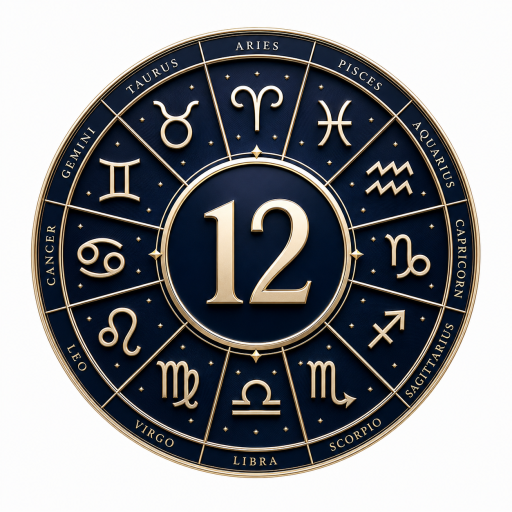
Planetary aspects are angular relationships between two planets, luminaries, or astrological points within a chart. These angles are primarily calculated using their positions along the zodiac wheel, which contains 360 degrees divided into twelve zodiac signs of 30 degrees each.
When two planets are separated by particular numbers of degrees, astrologers interpret a symbolic relationship between the functions those planets represent. Some aspects are associated with an easier integration of certain characteristics, while others symbolize tension, contrasting needs, or opportunities for adaptation.
For example, Mercury traditionally represents thinking and communication, while Mars is associated with initiative, action, and personal assertion. If these two planets form an aspect, the interpretation explores how those functions interact: how you express your ideas, defend your opinions, and respond when someone challenges your arguments.
Planetary aspects allow astrologers to interpret a birth chart as a network of interconnected elements rather than a collection of independent personality descriptions.
Someone may have Venus in a placement associated with emotional closeness, but if Venus forms certain aspects with Saturn, their expression of affection might be interpreted as more reserved or cautious. If Venus forms an aspect with Jupiter instead, the interpretation may emphasize emotional generosity or expansive romantic expectations.
It is important to distinguish between the mathematical calculation of planetary angles and their symbolic astrological meanings, which have not been established as scientifically demonstrated psychological effects.
WHAT ARE THE FIVE MAJOR PLANETARY ASPECTS?
Although astrology recognizes numerous angular relationships, five configurations form the foundation of major aspect interpretation.
CONJUNCTION ☌ — 0 DEGREES: Represents concentration, blending, intensification, and the combination of planetary functions.
SEXTILE ⚹ — 60 DEGREES: Is associated with cooperation, opportunities, and abilities that can develop through initiative.
SQUARE □ — 90 DEGREES: Symbolizes tension, effort, contradictions, and challenges that require a response.
TRINE △ — 120 DEGREES: Represents ease, natural flow, affinity, and abilities that may emerge spontaneously.
OPPOSITION ☍ — 180 DEGREES: Is associated with polarity, contrast, and the need to integrate two different tendencies.
These configurations originate from geometric relationships within the zodiac wheel. An opposition divides the circle into two parts, a trine into three, a square into four, and a sextile into six. A conjunction occurs when two positions share the same zodiac longitude.
However, identifying the angle of an aspect is only the first step. To interpret it more thoroughly, you must also consider the planets involved, their zodiac signs, their astrological houses, and the other relationships present throughout the chart.
THE CONJUNCTION: WHEN TWO PLANETS BLEND THEIR FUNCTIONS
A conjunction occurs when two planets or astrological points occupy the same zodiac longitude or are positioned sufficiently close together. Its exact angle is 0 degrees, and its astrological symbol is ☌.
Imagine Venus at 15 degrees Taurus and Jupiter at 17 degrees Taurus. The distance between them is only 2 degrees, placing them within the range commonly accepted for a conjunction.
The interpretation of this aspect focuses on the blending of planetary functions. Rather than expressing themselves entirely independently, the symbolic characteristics associated with both planets become closely connected.
This is why a conjunction can hold particular significance. It may emphasize specific desires, motivations, behaviors, or recurring themes within a birth chart.
A conjunction is not automatically beneficial or challenging. Its interpretation depends primarily on the planets involved and the conditions surrounding their placements.
A conjunction between the Moon and Venus may symbolize a close relationship between emotional needs, affection, and the pursuit of harmony. Someone with this configuration might find particular satisfaction in creating warm relationships or environments that provide emotional comfort.
A Mars-Saturn conjunction, on the other hand, brings together two traditionally different functions: the desire to act and the need to establish boundaries. This combination may symbolize determination and discipline, but it can also represent frustration when the desire to move forward encounters restrictions or demanding expectations.
One of the most interesting characteristics of a conjunction is that the functions involved may become difficult to separate. Someone with Mercury conjunct Mars might identify so strongly with their opinions that they respond immediately whenever those opinions are challenged.
The constructive expression of a conjunction develops when the planetary functions complement one another. Its challenges may become more apparent when one function dominates excessively or when the intensity of the combination makes it difficult to maintain perspective.
EXAMPLES OF PLANETARY CONJUNCTIONS AND THEIR MEANINGS
SUN CONJUNCT MOON: Connects personal identity with emotional needs. It may symbolize a strong identification between what you want to express and what you require to feel emotionally secure.
SUN CONJUNCT MERCURY: Connects identity with thought and communication. Ideas, opinions, and intellectual expression may hold particular importance in how you perceive yourself.
MOON CONJUNCT VENUS: Combines sensitivity, affection, and emotional comfort. It may emphasize close relationships, beauty, and the desire to feel appreciated and loved.
VENUS CONJUNCT MARS: Connects attraction, desire, and romantic initiative. It may symbolize emotional intensity and spontaneity in the expression of romantic interests.
MARS CONJUNCT SATURN: Represents the meeting of action and restriction. It may be associated with perseverance or difficulties taking action without experiencing pressure.
JUPITER CONJUNCT SATURN: Connects expansion and responsibility. Its interpretation explores how you balance the desire for growth with the need to establish sustainable foundations.
VENUS CONJUNCT NEPTUNE: Connects feelings with imagination and idealization. It may symbolize artistic sensitivity and romanticism, along with expectations that become difficult to sustain when they are not grounded in reality.
These interpretations provide general starting points. The meaning of a particular conjunction can change considerably depending on its broader chart context.
THE TRINE: WHEN TWO PLANETS NATURALLY COMPLEMENT EACH OTHER
A trine is a planetary aspect with an exact angle of 120 degrees. It is represented by a triangle, △, and is traditionally considered one of the most naturally flowing aspects in astrology.
Trines typically connect planets located in zodiac signs belonging to the same element: fire, earth, air, or water. Within traditional zodiac symbolism, this shared element suggests an affinity between the ways both planets express their functions.
For example, a planet at 10 degrees Taurus and another at 10 degrees Virgo form an exact trine. Both signs belong to the earth element and are separated by 120 degrees along the zodiac wheel.
Trines are commonly interpreted as abilities or tendencies that may emerge with relative ease. They do not necessarily represent skills you have deliberately developed. Instead, they may symbolize ways of thinking, acting, or connecting that feel particularly familiar.
A trine between Mercury and Jupiter may symbolize an ability to expand your knowledge, connect ideas, and communicate complex concepts. However, this does not guarantee academic achievement. Education, opportunities, interest, and dedication still matter.
A Venus-Saturn trine may be associated with the ability to combine affection and responsibility. In relationship astrology, it could represent comfort with stable commitments and an appreciation for consistency.
The interesting contradiction of a trine is that something that comes naturally can easily go unnoticed. Someone may possess certain abilities without developing them because they have never felt the need to work on them.
A trine represents the possibility of natural flow, but it does not replace the effort required to turn an ability into a meaningful achievement.
Having numerous trines does not mean living without difficulties. An apparent ease in expressing emotions can coexist with professional challenges, insecurities, or other contradictions symbolized elsewhere in the chart.
EXAMPLES OF PLANETARY TRINES AND THEIR MEANINGS
SUN TRINE JUPITER: Is traditionally associated with personal confidence, enthusiasm, and a willingness to explore new possibilities.
SUN TRINE SATURN: May symbolize a relatively natural integration of identity, discipline, and responsibility.
MOON TRINE VENUS: Is associated with an ease in expressing affection, enjoying companionship, and recognizing emotional needs.
MOON TRINE SATURN: May represent emotional steadiness, patience, and an organized approach to personal responsibilities.
MERCURY TRINE JUPITER: Connects thinking with intellectual expansion and the ability to understand broader perspectives.
VENUS TRINE MARS: May symbolize a flowing relationship between attraction, desire, initiative, and emotional expression.
MARS TRINE SATURN: Represents the possibility of combining determination, planning, and consistency while pursuing goals.
VENUS TRINE NEPTUNE: May emphasize imagination, artistic sensitivity, and creative expressions of affection.
THE SQUARE: WHEN DIFFERENT NEEDS CREATE TENSION
A square is an aspect with an exact angle of 90 degrees. Its symbol is □, and it is traditionally considered a dynamic or challenging astrological configuration.
Squares typically connect planets located in zodiac signs that share the same modality: cardinal, fixed, or mutable. These signs may share certain approaches to circumstances while expressing their characteristics through different elements.
For example, a planet at 20 degrees Aries and another at 20 degrees Cancer form an exact square.
A square symbolically represents a situation in which two planetary functions may interfere with one another. Both functions matter, but expressing them simultaneously may require effort, awareness, or adaptation.
Consider a square between the Moon and Mars. The Moon traditionally represents emotional needs, while Mars is associated with action and personal assertion. This combination may symbolize a tendency to react quickly when something affects your feelings.
The challenge would not necessarily involve experiencing intense emotions. Instead, it might involve finding ways to respond without allowing every uncomfortable feeling to become an impulsive reaction.
A square between Venus and Saturn may symbolize tension between the desire for emotional closeness and the need to protect yourself from rejection. Its interpretation might explore why someone wants a meaningful relationship yet struggles to become emotionally vulnerable.
A square should never be interpreted as a punishment or a guarantee of negative experiences. Psychological astrology often approaches squares as configurations that highlight areas where personal development may require greater attention.
Someone who learns to manage the contradictions symbolized by a square may develop abilities that initially did not come naturally.
Ultimately, a square represents a challenge of integration. Its interpretation is not about eliminating one of the needs involved, but discovering a more balanced way to respond to both.
EXAMPLES OF PLANETARY SQUARES AND THEIR MEANINGS
SUN SQUARE MARS: May symbolize tension between personal identity, self-assertion, and the way you respond to obstacles.
SUN SQUARE SATURN: Is associated with challenges involving confidence, expectations, authority, and responsibility.
MOON SQUARE MARS: May represent difficulties balancing emotional reactions with impulsive decisions.
MOON SQUARE SATURN: Explores the relationship between emotional needs, emotional reserve, and a sense of duty.
MERCURY SQUARE MARS: May symbolize tension between thinking, communication, and the desire to defend your opinions.
VENUS SQUARE SATURN: Is associated with potential contradictions between the desire for affection, vulnerability, and emotional security.
MARS SQUARE JUPITER: May represent difficulties finding balance between enthusiasm, action, and a realistic assessment of risks.
JUPITER SQUARE SATURN: Symbolizes the contrast between aspirations for growth and limitations that need to be respected.
THE OPPOSITION: WHEN TWO PLANETS REPRESENT EXTREMES THAT NEED TO BE INTEGRATED
An opposition occurs when two planets are separated by 180 degrees along the zodiac wheel. Its symbol is ☍, and it is one of the easiest angular relationships to identify visually.
In a birth chart, planets forming an opposition generally appear directly across from one another. For example, a planet at 12 degrees Gemini and another at 12 degrees Sagittarius form an exact opposition.
Opposite zodiac signs usually share the same modality while belonging to different but traditionally compatible elements. The six zodiac opposition axes are Aries-Libra, Taurus-Scorpio, Gemini-Sagittarius, Cancer-Capricorn, Leo-Aquarius, and Virgo-Pisces.
An opposition symbolizes polarity. It involves two tendencies that may initially appear contradictory, but integrating them can lead to a more comprehensive understanding of a particular situation.
A Sun-Moon opposition may symbolize a contrast between conscious desires and emotional needs. Someone may aspire to build an independent life while simultaneously experiencing a powerful need for belonging and emotional security.
Difficulties can arise when a person attempts to resolve this contradiction by identifying exclusively with one extreme. They might dedicate themselves entirely to independence during one period, only to realize later that important emotional needs have been neglected.
In psychological astrology, oppositions are also frequently associated with projection. This refers to the possibility that characteristics someone struggles to recognize within themselves may become prominent in how they perceive other people.
For example, a Venus-Uranus opposition might be explored as a tension between intimacy and freedom. Someone could identify strongly with stability while feeling attracted to highly independent partners, even though the desire for autonomy also belongs to their own emotional experience.
An opposition does not require permanently choosing between two extremes. Its interpretation explores how both can coexist without one eliminating the other.
This aspect can represent an opportunity to recognize seemingly incompatible needs and develop a perspective that makes room for both.
EXAMPLES OF PLANETARY OPPOSITIONS AND THEIR MEANINGS
SUN OPPOSITE MOON: Symbolizes polarity between conscious identity and emotional needs.
SUN OPPOSITE SATURN: May represent contrasts between personal expression, external expectations, and responsibility.
MOON OPPOSITE MARS: Connects emotional sensitivity with the desire to act, defend yourself, or assert personal needs.
MOON OPPOSITE SATURN: May symbolize tension between emotional closeness and the tendency to maintain self-control.
MERCURY OPPOSITE JUPITER: Represents the contrast between attention to detail and the pursuit of broader perspectives.
VENUS OPPOSITE MARS: May symbolize polarity between the desire for harmony and the direct expression of attraction and desire.
VENUS OPPOSITE URANUS: Explores the contrast between emotional commitment, independence, and the need for personal freedom.
MARS OPPOSITE SATURN: May represent difficulties balancing initiative with caution, boundaries, and long-term planning.
THE SEXTILE: THE ASPECT OF OPPORTUNITIES WAITING TO BE DEVELOPED
Although conjunctions, trines, squares, and oppositions often receive the most attention, a complete explanation of major planetary aspects must also include the sextile.
A sextile occurs when two planets are separated by 60 degrees, and its symbol is ⚹. It traditionally connects zodiac signs with compatible elements: fire with air or earth with water.
For example, a planet at 8 degrees Taurus and another at 8 degrees Cancer form an exact sextile.
The primary difference between a sextile and a trine lies in their interpretation. While a trine is commonly associated with spontaneous ease, a sextile represents opportunities for cooperation that may require initiative to develop.
A Mercury-Mars sextile could symbolize an opportunity to combine thought and action. This relationship might be explored through activities such as writing, debating, planning, or decision-making.
A Venus-Jupiter sextile may be associated with possibilities for expanding social relationships, developing creative interests, or enjoying meaningful shared experiences.
However, none of these interpretations guarantees that opportunities will appear automatically. A sextile represents a developmental possibility whose expression also depends on personal choices and circumstances.
WHAT ARE ORBS IN ASTROLOGY?
Two planets do not necessarily need to be separated by exactly 90, 120, or 180 degrees for astrologers to consider an aspect present. A margin of tolerance known as an orb is generally used.
An orb measures how far a particular configuration deviates from its exact angle.
Imagine two planets separated by 93 degrees. Because an exact square occurs at 90 degrees, the difference is 3 degrees. The planets may therefore form a square with a 3-degree orb.
If two planets are separated by 117 degrees, they may form a trine with a 3-degree orb because their distance from the exact 120-degree angle is again 3 degrees.
The smaller the orb, the more significance many astrological schools generally assign to that aspect. However, the planets involved and the overall chart context must also be considered.
There is no universal orb system accepted by every astrologer. Some schools allow relatively wide margins, while others prefer working with tighter configurations.
As a general reference, one possible approach to natal chart interpretation uses the following maximum orbs:
CONJUNCTION: 8 degrees.
OPPOSITION: 8 degrees.
SQUARE: 6 degrees.
TRINE: 6 degrees.
SEXTILE: 4 degrees.
These values provide a practical example rather than mandatory rules. Some systems allow wider orbs when the Sun or Moon is involved, while aspects involving asteroids, mathematical points, or minor configurations may receive narrower allowances.
This is one reason why two astrology programs can display different numbers of aspects in the same birth chart without necessarily calculating the planetary positions incorrectly.
HOW DO YOU CALCULATE A PLANETARY ASPECT?
To calculate an aspect using zodiac degrees, you need to identify the longitude of both planets within the complete 360-degree circle.
Each zodiac sign begins at a different position along the wheel:
Aries: 0 degrees.
Taurus: 30 degrees.
Gemini: 60 degrees.
Cancer: 90 degrees.
Leo: 120 degrees.
Virgo: 150 degrees.
Libra: 180 degrees.
Scorpio: 210 degrees.
Sagittarius: 240 degrees.
Capricorn: 270 degrees.
Aquarius: 300 degrees.
Pisces: 330 degrees.
If Venus is located at 15 degrees Taurus, its zodiac longitude is 45 degrees: the 30 degrees marking the beginning of Taurus plus its 15-degree placement.
If Jupiter is located at 15 degrees Virgo, its longitude is 165 degrees: the 150 degrees marking the beginning of Virgo plus its 15-degree placement.
Subtracting 45 from 165 produces a separation of 120 degrees. Venus and Jupiter therefore form an exact trine.
When the difference between two positions exceeds 180 degrees, subtract that difference from 360 to determine the shortest angular separation.
For example, a planet at 358 degrees and another at 2 degrees are separated by only 4 degrees across the boundary of the zodiac wheel. Their shortest angular distance is not 356 degrees.
Once you have calculated the separation, compare it with the recognized aspect angles and determine whether the difference falls within your chosen orb.
EXACT, APPLYING, AND SEPARATING PLANETARY ASPECTS
In addition to examining the distance between planets, astrology distinguishes the stage of development of an aspect.
An exact aspect occurs when the angular separation precisely matches the corresponding aspect angle. An opposition of exactly 180 degrees is one example.
An applying aspect is one that is still forming. The relative motion of the planets brings their separation progressively closer to the exact angle.
A separating aspect, on the other hand, is one that has already reached exactness, with the planets now moving away from that configuration.
Imagine the separation between two planets initially measures 87 degrees and gradually increases toward 90 degrees. The square is applying.
If the separation subsequently increases to 93 degrees, the square is now separating.
Many astrological traditions pay particular attention to applying aspects because they symbolically represent processes that are developing. Separating aspects may be interpreted as configurations whose moment of greatest exactness has already passed.
However, determining whether an aspect is applying or separating requires more than simply examining the degrees. You must consider the apparent movement of both planets, including possible retrogrades and changes in direction.
This distinction becomes particularly relevant when studying planetary transits.
CAN PLANETS FORM ASPECTS OUTSIDE THEIR EXPECTED ZODIAC SIGN RELATIONSHIPS?
Yes. In modern astrology based on planetary degrees, there are configurations known as out-of-sign or dissociate aspects.
Imagine one planet located at 29 degrees Aries and another at 1 degree Taurus. Although they occupy different zodiac signs, their angular separation is only 2 degrees.
Under a system that uses degree-based orbs, these two planets may form a conjunction.
Another example involves a planet at 29 degrees Aries and another at 1 degree Leo. Although Aries and Leo belong to the same element and are traditionally connected through a trine relationship, these particular positions are separated by 92 degrees. They may therefore form a square with a 2-degree orb.
This distinction demonstrates why knowing only the zodiac signs of planets is not always enough to identify their aspects.
Some traditional schools place greater emphasis on whole-sign relationships and may interpret these configurations differently.
When studying astrology, it is therefore helpful to understand which calculation and interpretation methods are being used by the astrologer or software generating your chart.
WHAT DOES EACH PLANET REPRESENT WHEN INTERPRETING ASPECTS?
Understanding an aspect requires familiarity with the symbolic functions attributed to each planet. Astrology commonly uses the term planets to include the Sun and Moon, even though they are astronomically classified as a star and a natural satellite, respectively.
SUN ☉: Identity, willpower, vitality, self-expression, and a sense of purpose.
MOON ☽: Emotions, emotional needs, habits, memories, and the pursuit of security.
MERCURY ☿: Thinking, communication, learning, reasoning, and exchanging information.
VENUS ♀: Affection, attraction, personal values, pleasure, relationships, and artistic sensitivity.
MARS ♂: Action, desire, initiative, personal assertion, and responses to obstacles.
JUPITER ♃: Expansion, confidence, education, beliefs, and the pursuit of new possibilities.
SATURN ♄: Responsibility, structure, limitations, discipline, patience, and maturity.
URANUS ♅: Independence, innovation, change, originality, and questioning established structures.
NEPTUNE ♆: Imagination, sensitivity, inspiration, idealization, and the search for meaning.
PLUTO ♇: Transformation, intensity, power, control, and profound processes of renewal.
The nature of an aspect determines how astrologers interpret the relationship between these functions.
Venus and Saturn represent the same general symbolic principles whether they form a trine or a square. What changes is how their interaction is understood.
THE DIFFERENCE BETWEEN PLANETS, ZODIAC SIGNS, HOUSES, AND ASPECTS
One of the most useful ways to begin interpreting a birth chart is to distinguish four fundamental levels.
THE PLANET REPRESENTS WHAT: It identifies the symbolic function being examined, such as thinking, affection, or initiative.
THE ZODIAC SIGN REPRESENTS HOW: It describes the manner in which that function may express itself within the astrological framework.
THE HOUSE REPRESENTS WHERE: It identifies the area of experience associated with that placement, such as home, relationships, education, or career.
THE ASPECT REPRESENTS HOW THEY INTERACT: It provides a framework for understanding relationships between different chart elements.
For example, Mars in Virgo in the sixth house may symbolize a detailed, practical, and organized approach to taking action, particularly in professional activities and everyday routines.
If Mars also forms a trine with Saturn in Capricorn in the tenth house, the interpretation may emphasize a supportive relationship between daily effort, discipline, and professional ambitions.
If Mars instead forms a square with Saturn in Gemini, the interpretation might emphasize a more demanding relationship between personal initiative and limitations involving organization or communication.
The complete meaning develops through combining these different levels. Interpreting an aspect alone while ignoring the rest of the chart can produce overly general conclusions.
CAN PLANETARY ASPECTS INVOLVE THE ASCENDANT AND MIDHEAVEN?
Astrological aspects are not limited to relationships between planets. They can also be calculated in relation to important birth chart points.
The Ascendant is traditionally associated with how you present yourself to the world, first impressions, and the way you approach new experiences.
The Midheaven is commonly associated with professional aspirations, public reputation, and particular long-term objectives.
Aspects can also be examined in relation to the Descendant, the Imum Coeli, the lunar nodes, and other points recognized by different astrological schools.
For example, Mars conjunct the Ascendant may symbolize an assertive personal presence or a direct approach to new situations.
Venus trine the Midheaven might be interpreted as a supportive relationship between emotional, artistic, or social interests and the public expression of particular abilities.
It is important to distinguish that the Ascendant, Midheaven, and lunar nodes are not planets or equivalent physical bodies. They are calculated points based on astronomical references.
An accurate birth time and location become especially important when interpreting aspects involving the angles of a birth chart.
PLANETARY ASPECTS IN THE NATAL CHART
A natal chart represents the astrological positions corresponding to the time and location of someone’s birth.
Its aspects are calculated by examining relationships between the different placements present at that moment. Examples include the relationship between natal Moon and natal Venus or natal Mars and natal Saturn.
In this context, aspects are often interpreted as relatively enduring symbolic tendencies. They may be used to explore ways of thinking, personal needs, motivations, strengths, or internal contradictions.
However, a natal aspect does not force someone to behave in a particular way. Education, experiences, environment, culture, and individual decisions all contribute to personal development.
It is also unwise to interpret an isolated configuration as though it explains someone’s entire personality.
A square between Mercury and Mars may take on different interpretations if Mercury also forms a trine with Saturn. The first configuration might symbolize communication challenges, while the second could highlight organizational abilities and thoughtful reflection.
A birth chart should be understood as a complete system in which multiple elements may complement or modify the interpretation of a particular theme.
PLANETARY ASPECTS IN ASTROLOGICAL TRANSITS
Transits are studied by examining planetary positions at a particular time and comparing them with other placements, especially those in a natal chart.
When a moving planet forms a conjunction, trine, square, or another aspect with a natal planet, astrologers symbolically interpret certain themes as becoming particularly relevant during that period.
For example, transiting Saturn square the natal Sun might be interpreted as a period of reconsidering responsibilities, personal objectives, and expectations.
Transiting Jupiter trine natal Mercury could be associated with a period of increased interest in learning, communication, or expanding your knowledge.
Transiting Uranus opposite natal Venus may be explored through changing romantic expectations, desires for independence, or the reconsideration of personal values.
Transits can also be studied between planets currently in motion without necessarily comparing them with a particular birth chart. This approach is commonly used in collective astrological interpretations.
The duration of a transit depends on the apparent speed of the planet, the chosen orb, and possible retrograde periods. Lunar aspects generally last considerably less time than aspects involving slower-moving planets.
Retrograde motion can cause a planet to revisit particular degrees and form an exact aspect with the same natal placement multiple times.
These interpretations do not guarantee specific events. A Venus transit does not ensure a romantic relationship, and a Saturn square does not mean that a negative experience will necessarily occur.
PLANETARY ASPECTS IN LOVE, RELATIONSHIPS, AND SYNASTRY
Synastry is an astrological technique that compares two birth charts to symbolically explore relationships between their different elements.
Rather than examining only the internal aspects of a single chart, synastry analyzes angular relationships between the planets and astrological points of both people.
For example, if one person’s Venus forms a trine with another person’s Moon, the interpretation may emphasize a possible affinity between expressions of affection and emotional needs.
A conjunction between one person’s Venus and another person’s Mars is commonly associated with attraction, romantic initiative, and the expression of desire.
A Mercury-Mars square may be interpreted as a difference in communication styles and responses to disagreements.
A Venus-Uranus opposition may be explored through issues involving individual freedom, stability, and expectations surrounding commitment.
However, synastry cannot determine with certainty whether a relationship will be lasting, healthy, or fulfilling.
A couple with numerous trines may still experience serious communication problems. Similarly, two people with several squares may build a stable relationship through mutual respect, clear agreements, and a willingness to resolve their differences.
Astrological compatibility should never replace observing how another person actually behaves.
WHAT ARE PLANETARY ASPECT PATTERNS?
In some birth charts, multiple aspects connect to form more complex geometric structures. These configurations are known as aspect patterns.
Their interpretation attempts to understand how a group of planets interacts rather than focusing exclusively on each individual planetary relationship.
THE GRAND TRINE
A Grand Trine occurs when three planets form trines with one another, creating a triangle within the birth chart.
For example, three planets located at approximately 10 degrees Aries, Leo, and Sagittarius would create this configuration.
The Grand Trine is traditionally associated with affinity, natural abilities, and relatively easy access to particular planetary functions.
Its main interpretive challenge involves recognizing whether those abilities are being developed or whether excessive comfort is limiting personal growth.
THE T-SQUARE
A T-square occurs when two planets form an opposition and a third planet forms a square with each of them.
The pattern therefore contains two squares and one opposition.
The planet receiving both squares is often called the focal planet or apex. It may hold particular interpretive significance because it concentrates part of the tension symbolized by the pattern.
In astrology, this configuration is often associated with recurring challenges that may encourage effort, initiative, and the development of personal strategies.
THE GRAND CROSS
A Grand Cross typically occurs when four planets are positioned approximately 90 degrees apart.
This configuration contains four squares and two oppositions, creating a structure that brings several different needs and planetary functions into relationship with one another.
Its interpretation may highlight symbolic situations in which acting in one direction requires simultaneously considering other responsibilities or motivations.
It is not a prediction of inevitable hardship. It can be explored through the development of organization, resilience, and balance when facing complex demands.
THE MYSTIC RECTANGLE
A Mystic Rectangle consists of two oppositions, two trines, and two sextiles.
It combines aspects traditionally associated with ease and configurations connected to contrast and polarity.
Its interpretation often explores how certain abilities may help manage contradictions and discover constructive alternatives.
The name of this pattern belongs to astrological tradition and does not imply scientifically demonstrated supernatural abilities.
THE KITE ASPECT PATTERN
A Kite forms when a Grand Trine incorporates a fourth planet that opposes one of its points and forms sextiles with the other two.
This configuration combines natural flow, opportunities, and tension.
Within astrological interpretation, it may symbolize a way of directing natural abilities toward concrete objectives, using the opposition as motivation to develop characteristics that initially came easily.
OTHER PLANETARY ASPECTS: SEMISQUARE, QUINCUNX, QUINTILE, AND MORE
In addition to the major aspects, other angular relationships are used by some astrological schools to introduce additional nuances into chart interpretation.
SEMΙSEXTILE — 30 DEGREES: Is associated with minor adjustments and connections between functions that may express themselves differently.
SEMISQUARE — 45 DEGREES: Is commonly interpreted as a less obvious tension than a square, potentially highlighting recurring difficulties.
QUINTILE — 72 DEGREES: Some astrological traditions associate it with creativity, particular abilities, and original approaches to organizing resources.
SESQUISQUARE — 135 DEGREES: Is associated with tension, demands, and the need for adaptation.
BIQUINTILE — 144 DEGREES: May symbolize relationships involving creative expression and the development of specific abilities.
QUINCUNX — 150 DEGREES: Also known as the inconjunct, it is often associated with difficulties integrating functions that require ongoing adjustments.
Other configurations, including the septile and novile, are recognized particularly within specialized astrological systems.
Minor aspects generally receive tighter orbs. If you are beginning to study astrology, understanding the five major aspects before introducing numerous additional configurations is usually a more effective approach.
HOW ARE PLANETARY ASPECTS RELATED TO THE MOON PHASES?
The lunar cycle provides one of the most familiar examples of the angular relationship between the Sun and Moon as observed from Earth.
During the New Moon, the Sun and Moon occupy approximately the same zodiac direction. In terms of geocentric ecliptic longitude, the New Moon corresponds to a conjunction.
During the First Quarter Moon, the difference between their longitudes reaches 90 degrees during the growing phase of lunar separation.
The Full Moon corresponds to a 180-degree opposition between the ecliptic longitudes of the Sun and Moon.
The Last Quarter Moon again corresponds to a shortest angular separation of 90 degrees, but during a different stage of the cycle.
These astronomical configurations can be calculated precisely. Astrological interpretations, such as associating the New Moon with beginnings or the Full Moon with culmination, belong to the symbolic framework.
It is also important to understand that not every New Moon produces a solar eclipse, and not every Full Moon produces a lunar eclipse. Eclipses require additional conditions involving orbital alignment and proximity to the lunar nodes.
HOW TO IDENTIFY PLANETARY ASPECTS IN A BIRTH CHART
Most astrology programs represent aspects through lines connecting planetary placements inside the zodiac wheel.
Blue lines are commonly used for aspects such as trines and sextiles, while red lines are often used for squares and oppositions.
However, these colors are not universal. Different applications may use alternative systems, particularly for conjunctions and minor aspects.
You may also encounter an aspect table, generally organized as a grid displaying the planets and symbols corresponding to their angular relationships.
When beginning to interpret a chart, identify the type of aspect first, the planets involved second, and the orb third.
Next, examine the zodiac signs and houses containing those planets. Also check whether they form additional aspects that might complement or modify your original interpretation.
Avoid interpreting every line as though it necessarily corresponds to a specific life event. Chart geometry provides the starting point, but interpretation requires context.
ARE ALL PLANETARY ASPECTS EQUALLY IMPORTANT?
Not necessarily. Within astrological practice, certain aspects receive greater attention because of their exactness, the planets involved, or their position within the overall chart.
For example, a square with a 1-degree orb may receive greater emphasis than a similar configuration positioned near the outer limit of the accepted orb.
Aspects involving the Sun, Moon, Ascendant, or chart ruler often receive particular attention in numerous interpretive approaches.
It is also important to distinguish between generational and more personal aspects.
Two slow-moving planets may maintain a particular angular relationship for extended periods, meaning many people born around the same time may share that configuration.
When one of those planets forms a close aspect with the Moon, Sun, or another personal chart element, its interpretation may become more individualized.
The importance of an aspect also depends on more than the number of lines appearing in a chart. One particularly meaningful configuration may deserve more attention than several minor relationships.
ARE THERE GOOD AND BAD PLANETARY ASPECTS?
One of the most common misunderstandings among astrology beginners involves classifying every aspect as either good or bad.
Traditionally, trines and sextiles are considered harmonious, while squares and oppositions are often described as challenging. A conjunction has a variable interpretation depending on the planets involved.
However, a harmonious configuration does not guarantee positive outcomes, and a challenging configuration does not ensure inevitable difficulties.
A Mars-Jupiter trine may symbolize an ease in acting enthusiastically, but the same combination could also be explored through a tendency to take risks without adequately considering their consequences.
A Mars-Saturn square may symbolize frustration or restrictions, while also representing themes involving the development of discipline, perseverance, and effective planning.
The fundamental distinction is not between aspects that bring happiness and aspects that cause suffering, but between different ways planetary functions are interpreted as interacting.
Responsible astrological interpretation considers possibilities, contradictions, and context rather than turning a planetary placement into a definitive judgment about someone’s life.
COMMON MISTAKES WHEN INTERPRETING PLANETARY ASPECTS
The first mistake is interpreting an aspect without considering the planets involved. A Mercury-Mars square does not explore the same themes as a Venus-Saturn square.
The second involves ignoring orbs. Two planets may occupy traditionally compatible zodiac signs without forming an aspect within the chosen degree-based allowance.
The third mistake is assuming a conjunction must be beneficial. Blending two planetary functions may intensify both their natural affinities and their contradictions.
The fourth involves believing a birth chart containing numerous squares predicts a life of suffering. Astrological configurations do not provide a reliable basis for making such predictions.
The fifth mistake is assuming a chart filled with trines guarantees talent, success, or happiness. Having a potential ability and actually developing it are not the same thing.
The sixth involves using synastry to justify harmful behavior. No conjunction, opposition, or square makes manipulation, disrespect, or controlling behavior something you should accept in a relationship.
The seventh mistake is confusing astrological interpretations with scientific facts about personality. Although planetary positions and angles can be calculated mathematically, their psychological associations lack robust scientific validation.
Finally, another common mistake is trying to interpret too many elements simultaneously. Understanding a few significant aspects within their proper context can be more useful than memorizing dozens of interpretations without recognizing how they connect.
FREQUENTLY ASKED QUESTIONS ABOUT PLANETARY ASPECTS
WHAT IS THE STRONGEST PLANETARY ASPECT?
The conjunction is often considered one of the most significant aspects because of the proximity between the placements involved. However, a particularly exact opposition or square may also receive considerable attention, depending on the planets and overall chart context.
WHAT IS THE MOST HARMONIOUS PLANETARY ASPECT?
The trine is commonly considered the aspect most representative of natural flow. The sextile also traditionally belongs to the harmonious group, although its interpretation places greater emphasis on opportunities that need to be developed.
WHAT IS THE DIFFERENCE BETWEEN A SQUARE AND AN OPPOSITION?
A square symbolizes tension that may encourage action and require changes. An opposition represents polarity between two tendencies that need to find balance. Their exact angles are 90 and 180 degrees, respectively.
CAN TWO PLANETS FORM A CONJUNCTION IN DIFFERENT ZODIAC SIGNS?
Yes. If they are positioned near the boundary between two signs and their angular separation falls within the accepted orb, many modern astrological schools recognize an out-of-sign conjunction.
WHAT DOES IT MEAN TO HAVE MANY ASPECTS IN YOUR BIRTH CHART?
It means numerous angular relationships exist within the calculation criteria being used. Astrologically, this can be explored as a complex network of interactions, but it does not automatically determine whether someone will have an easier or more challenging life.
WHAT HAPPENS IF A PLANET HAS NO ASPECTS?
Some astrological schools interpret a planet without major aspects as expressing its functions in a way that is less integrated with the remainder of the chart. However, whether a planet is considered unaspected depends on the orbs and aspect types included in the analysis.
DO NATAL ASPECTS CHANGE OVER TIME?
The aspects in your original birth chart remain fixed because they correspond to your moment of birth. What changes are subsequent planetary positions and the relationships examined through transits, progressions, and other astrological techniques.
CAN YOU CALCULATE PLANETARY ASPECTS WITHOUT KNOWING YOUR BIRTH TIME?
Some planetary aspects can be estimated using your birth date alone. However, the Moon’s exact position can change considerably throughout a single day, and accurately calculating the Ascendant, Midheaven, and astrological houses requires a sufficiently precise birth time and location.
CAN EVERY PLANET FORM EVERY ASPECT WITH EVERY OTHER PLANET?
No. From a geocentric perspective, Mercury and Venus remain relatively close to the Sun in the sky. They therefore cannot form squares, trines, or oppositions with the Sun. The geometric possibilities depend partly on the orbital characteristics of the planets involved.
CAN PLANETARY ASPECTS ACCURATELY PREDICT THE FUTURE?
There is no robust scientific evidence that planetary aspects can accurately predict personal events. Within astrology, they are used as symbolic tools for interpreting themes, possibilities, and processes of reflection.
UNDERSTANDING PLANETARY ASPECTS MEANS UNDERSTANDING HOW A BIRTH CHART WORKS TOGETHER
The interpretive richness of planetary aspects comes from recognizing that the characteristics associated with a person do not operate entirely independently. You may have desires that complement each other, needs that appear contradictory, and abilities that require different approaches to development.
A conjunction represents the concentration of planetary functions. A trine symbolizes natural flow. A square explores challenges that require solutions. An opposition represents the integration of contrasting perspectives, while a sextile highlights possibilities that can develop through initiative.
Learning these meanings allows you to move beyond generalized zodiac sign descriptions and understand how a more comprehensive astrological interpretation is constructed.
A birth chart does not need to be free of squares to contain possibilities for growth, nor does it need to be filled with trines to represent an interesting life. Its interpretation becomes more meaningful when you stop searching for perfect configurations and begin exploring how all its components relate to one another.